
Kitchen Deep Cleaning
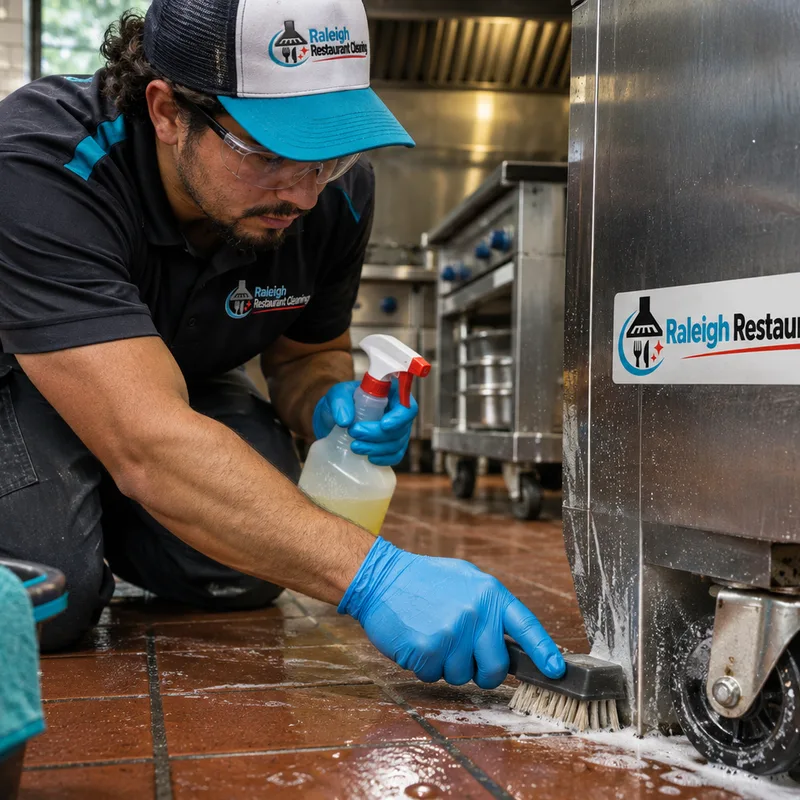
Degreasing and detailed cleaning for prep areas, walls, floors, base edges, equipment exteriors, undersides, legs, casters, and accessible spaces behind cooking and refrigeration equipment.
Serving Raleigh, North Carolina & surrounding areas
Open 24/7
Detailed deep cleaning for commercial kitchens, dining areas, walk-in coolers, and hard-to-reach surfaces, planned around your restaurant's operating schedule.
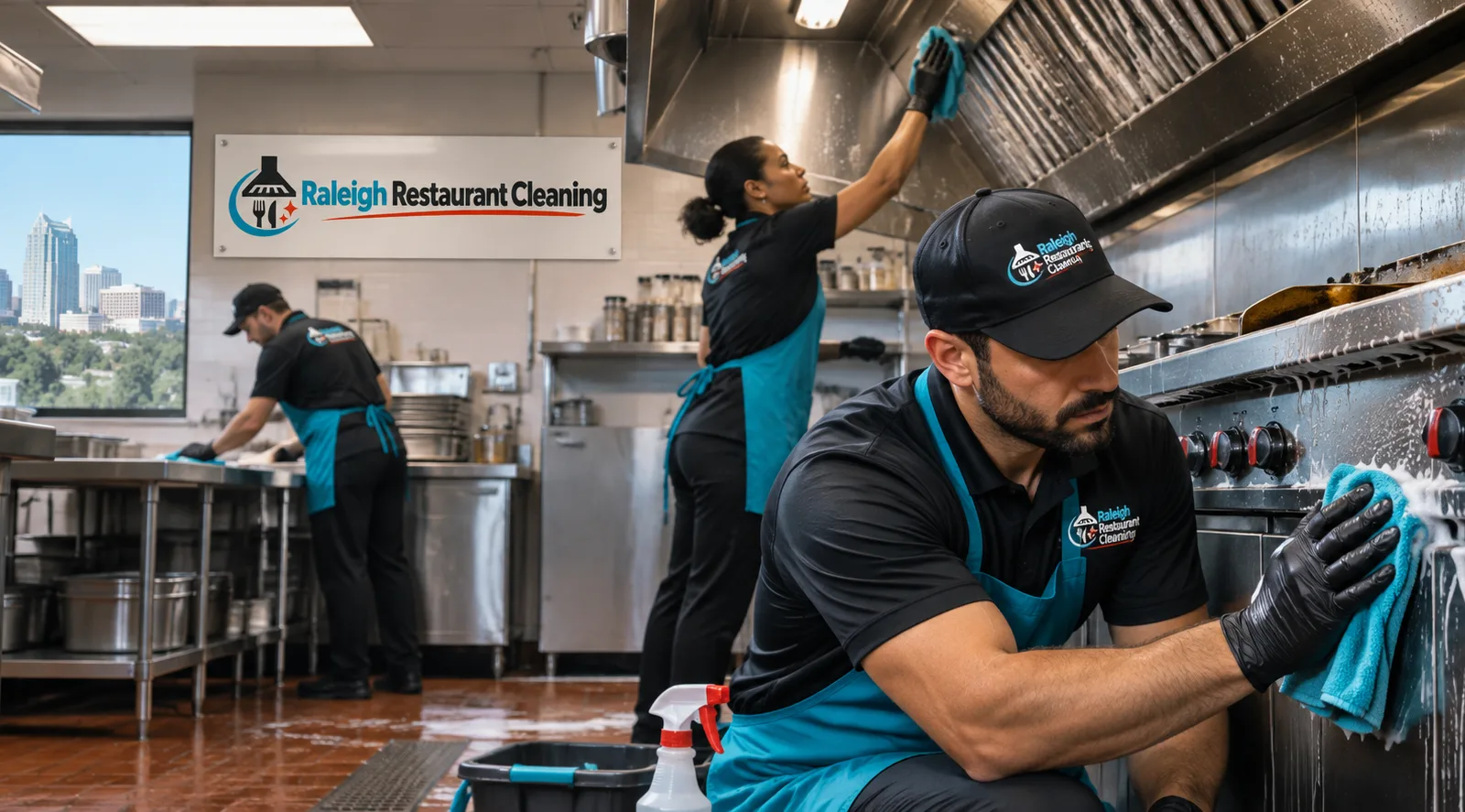
Raleigh Restaurant Cleaning is a Restaurant Cleaning Company focused on the detailed work that routine closing duties may not cover. Grease migrates behind equipment, residue collects along floor edges, and dust settles on overhead pipes, vents, and ledges. A planned deep clean addresses those areas without confusing sanitation with a quick cosmetic wipe-down.
Our work can cover back-of-house and front-of-house areas within an agreed scope. Before work begins, an experienced restaurant service team in Raleigh coordinates access, priorities, and timing. That preparation matters for restaurants near Downtown Raleigh, where loading and access can be constrained, and for North Hills dining operations that need cleaning scheduled around steady guest traffic.
Each job begins with the conditions in the facility. We identify food-contact surfaces, movable equipment, fixed equipment, grease-heavy zones, sensitive controls, floor drains, cooler shelving, and overhead surfaces. The written scope states what will be cleaned, what the restaurant must prepare, and which areas require manager approval before equipment is moved.
Degreasing and detailed cleaning for prep areas, walls, floors, base edges, equipment exteriors, undersides, legs, casters, and accessible spaces behind cooking and refrigeration equipment.
Cleaning for accessible walls, floors, shelving, door surfaces, gaskets, and corners after food is removed or protected according to the agreed preparation plan.
Removal of settled dust and debris from accessible pipes, vents, ledges, ceiling-mounted elements, and other elevated surfaces using suitable access equipment and containment practices.
Detailed attention to floors, baseboards, chair and table bases, service stations, partitions, and other surfaces that collect residue during daily use.
Focused cleaning around floor-wall junctions, thresholds, corners, kick plates, drains, and equipment contact points where buildup is easy to miss.
A defined scope for one problem area, such as a cooler, cook line, storage room, or overhead dust accumulation, without requiring a full-facility project.
Professional restaurant deep cleaning starts with soil identification. Cooking grease generally needs an appropriate degreaser and enough dwell time to loosen the film before agitation and removal. Mineral deposits, carbonized residue, and ordinary food soil are different problems, so one chemical or tool is not suitable for every surface.
Material compatibility also matters. Stainless steel should be cleaned with its grain, while painted surfaces, plastics, rubber gaskets, aluminum, and control panels may require different products and moisture levels. Food-contact surfaces need proper rinsing when required by the product label, followed by any separate sanitizing step specified in the scope. Cleaning removes soil; sanitizing is a distinct process.
Raleigh's warm, humid summers can add moisture-management concerns around coolers and air-conditioned spaces. Crews should avoid saturating electrical components, refrigeration controls, and porous materials. In Glenwood South, late operating hours often make overnight coordination practical. Restaurants in the Warehouse District may also have exposed overhead structures that require planned high dusting rather than routine floor-level cleaning.
Step 1 of 5
We review the requested areas, equipment layout, buildup, access limits, water availability, floor drains, sensitive surfaces, and operating schedule. The restaurant identifies any equipment that cannot be moved or opened.
Step 2 of 5
The work plan lists included areas, exclusions, preparation duties, timing, and access needs. This is also when we determine whether cooler contents must be removed and whether equipment needs to be cooled, shut down, or disconnected by authorized restaurant personnel.
Step 3 of 5
Food, utensils, packaging, and clean wares are removed or protected as agreed. Crews establish work zones, place warning signs when needed, and protect adjacent surfaces before applying cleaning products.
Step 4 of 5
Work generally proceeds from high surfaces to low surfaces and from less soiled zones toward heavier buildup. Degreasing, agitation, rinsing, extraction, and detail work are selected according to the surface and soil.
Step 5 of 5
The completed areas are reviewed against the written scope. Any access issue or condition that limited cleaning is documented so the manager knows what was completed before the restaurant resumes normal use.
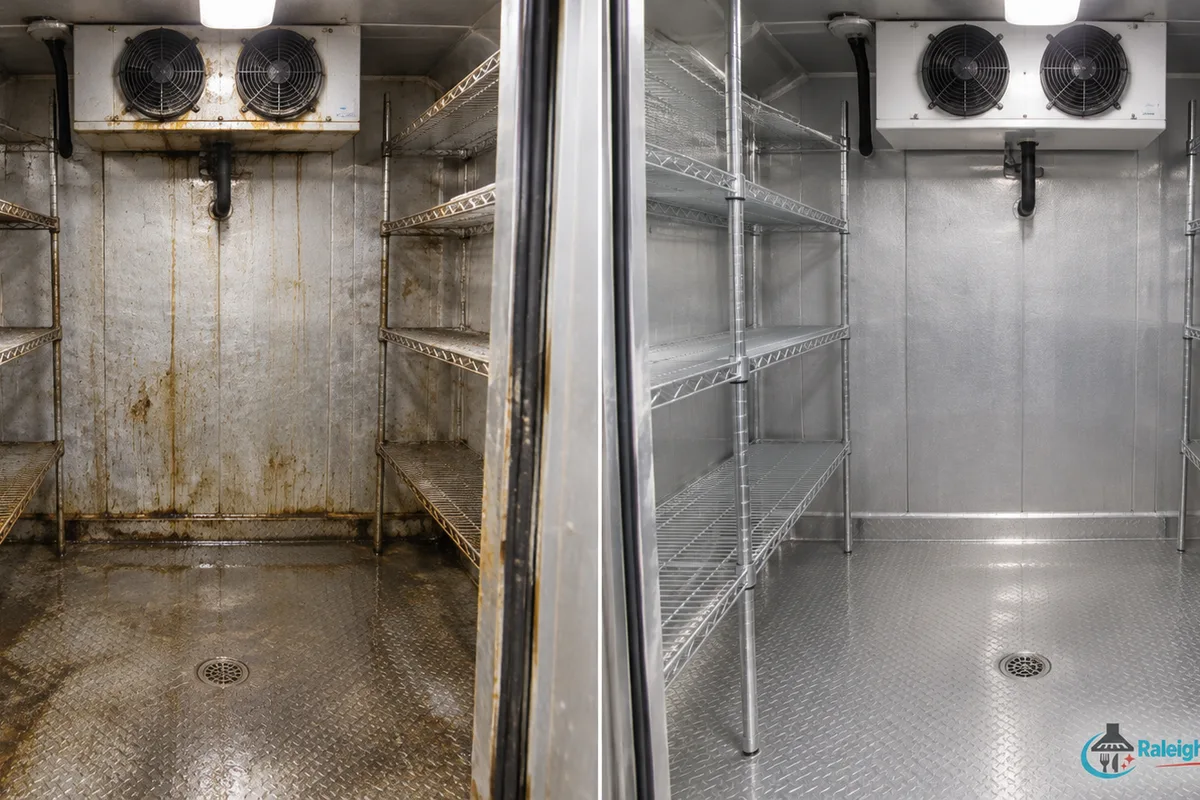
Walk-in cooler cleaning should be arranged around food safety and refrigeration requirements. The restaurant remains responsible for deciding where food will be held and for maintaining required product temperatures while shelving or interior surfaces are being cleaned. Open food should never be exposed to spray, loosened debris, or cleaning chemicals.
After the cooler is prepared, cleaning may include accessible shelving, walls, door surfaces, gaskets, floor edges, and corners. Heavy ice, refrigerant problems, damaged gaskets, persistent condensation, and active leaks are maintenance issues rather than ordinary cleaning tasks. Those conditions should be corrected by the appropriate refrigeration professional.
A cooler should not be flooded. Controlled application and prompt moisture removal protect the space and reduce water near controls, fans, and thresholds. The final inspection checks for remaining residue, pooled water, and areas blocked by fixed equipment or stored goods.
High dusting addresses overhead surfaces that ordinary nightly cleaning cannot safely reach. Typical scope areas include exposed pipes, conduit, ledges, vents, beams, light exteriors, and the tops of tall fixtures when they are accessible and safe to clean. The method may use extension tools, HEPA-filtered vacuuming, damp wiping, or a combination based on the debris and surrounding surfaces.
Containment is important because dry dust can fall onto prep areas and equipment. Food and clean wares should be removed or fully protected, and overhead work should be completed before lower surfaces receive their final cleaning. Access equipment must fit the work area without contacting hot appliances, suspended fixtures, or active prep stations.
Buildings with exposed ceilings, including some restaurant spaces in the Warehouse District, can present more overhead surface area than a finished drop ceiling. Cameron Village, officially renamed the Village District, has restaurants mixed with retail and service businesses, so access and work hours may need to account for neighboring operations. These details belong in the schedule before a crew arrives.
Managers know which rooms, surfaces, and equipment exteriors are included. Exclusions and access limits are recorded before work starts.
Deep cleaning can be planned for closed periods, overnight windows, or other times that reduce interference with food preparation and guest service.
Products and tools are chosen for stainless steel, resilient flooring, painted walls, plastics, and other materials rather than applying one harsh method throughout.
Restaurant deep cleaners can address accessible overhead ledges, pipes, equipment bases, casters, wall edges, and other areas that daily checklists may omit.
The restaurant receives practical instructions for food removal, equipment cooldown, access, keys, alarms, and manager availability.
A closeout review identifies completed work along with blocked areas, damaged surfaces, or maintenance conditions discovered during cleaning.
A clear scope makes deep cleaning easier to schedule and evaluate. Tell us which areas need attention, when the facility is available, and whether food or equipment must be moved before work begins.
Call for a Free QuoteRestaurant deep cleaning is priced from the actual scope, condition, access, and scheduling requirements rather than a flat facility rate. Major cost drivers include kitchen size, grease buildup, equipment movement, cooler preparation, overhead access, water and drain access, and whether the work must occur overnight. A walkthrough at the restaurant provides the information needed for a written estimate.
The schedule depends on the number of areas, soil level, equipment access, and crew size. A targeted walk-in cooler or cook-line project may fit within one closed period, while a larger kitchen, dining area, and high-dusting scope may require a longer window or phased work. Downtown Raleigh access limits and late closing times should be addressed during scheduling.
Food and clean wares must be removed or securely protected from debris, moisture, and cleaning products before work starts. Walk-in cooler projects often require the restaurant to relocate products while maintaining required holding temperatures. The preparation plan identifies which shelves, prep surfaces, and work zones must be cleared.
Movable equipment may be repositioned when the scope allows and it can be handled safely, but restaurant staff or qualified trades must manage gas, electrical, water, and refrigeration connections. Equipment should be cool, stable, and accessible. Heavy or hard-connected units remain in place unless separate arrangements are made.
General kitchen deep cleaning does not automatically include internal hood, fan, or duct cleaning. Those systems require specialized methods and should be clearly identified during the walkthrough. Accessible hood exteriors or nearby surfaces may be included when the written scope specifically lists them.
High dusting is usually best scheduled when food preparation and guest service have stopped. Overhead debris can fall during removal, and ladders or other access equipment need a controlled work area. Restaurants with exposed ceilings in Raleigh's Warehouse District may need extra containment and a longer closed work window.
Clear the agreed work areas, relocate exposed food and utensils, cool cooking equipment, identify sensitive controls, and arrange building access. Managers should also disclose active leaks, damaged flooring, loose fixtures, pest activity, or equipment that cannot be moved. A preparation checklist can be matched to the final scope.
Yes, a targeted scope can focus on a cook line, walk-in cooler, storage area, dining room, or elevated dust buildup. This approach is useful when one area needs attention before a broader cleaning is scheduled. Pricing and timing still depend on access, condition, and the preparation required at the Raleigh facility.
Describe the kitchen, cooler, dining, or overhead areas that need work. Raleigh Restaurant Cleaning will review the conditions and prepare a clear scope based on access, timing, and the level of detail required.