
Cooking-Line Exteriors
Degreasing targets accessible sides, fronts, legs, casters, control surrounds, and the floor edges where aerosolized oils collect. Equipment is handled according to the agreed access plan.
Serving Raleigh, North Carolina & surrounding areas
Open 24/7
Remove stubborn grease and food residue from hard-to-reach kitchen surfaces, then restore floors with a cleaning plan built around your equipment, operating hours, and facility needs.
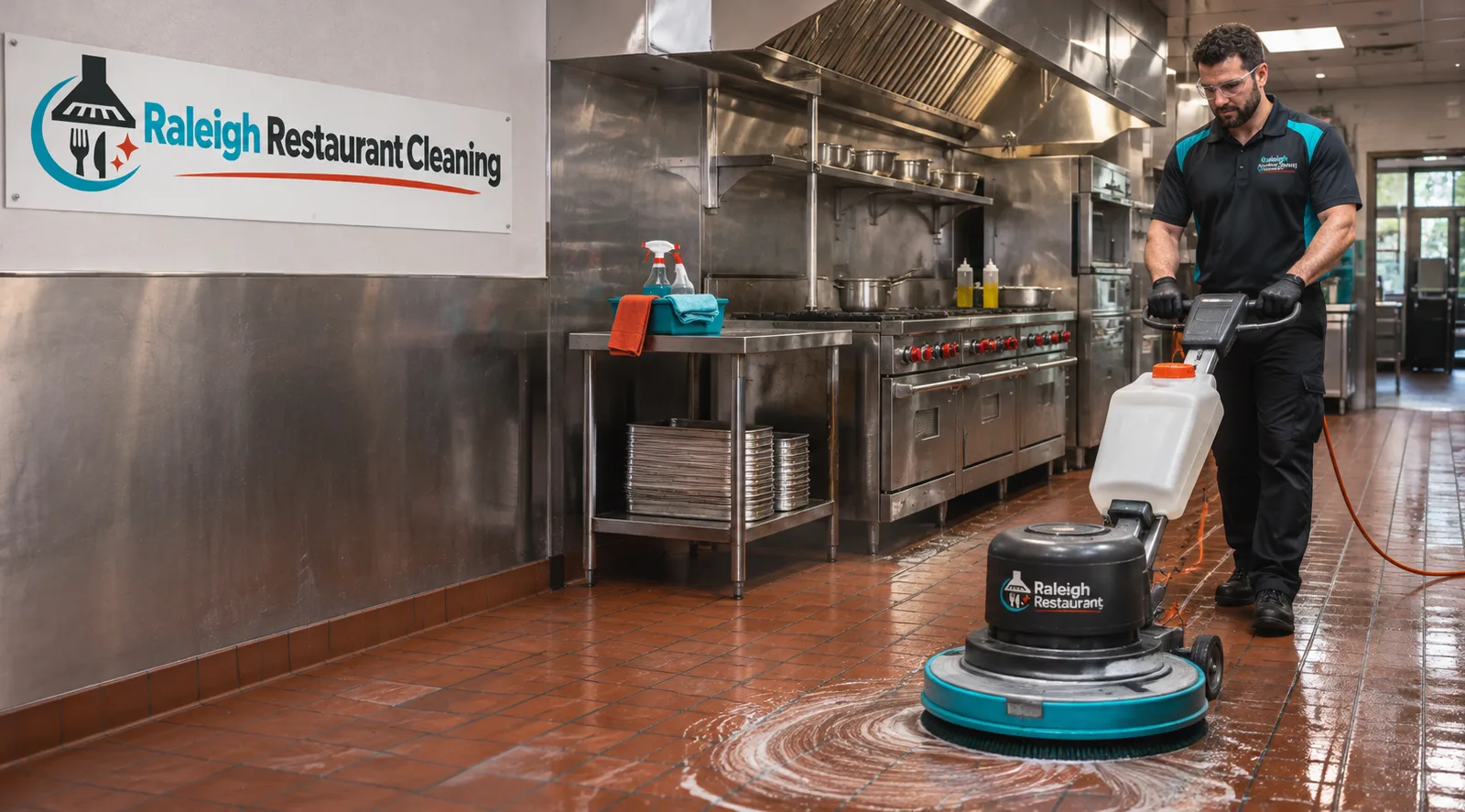
Restaurant Kitchen Deep Cleaning Durham work addresses the grease, carbon residue, food soil, and buildup that routine closing duties may leave behind. Raleigh Restaurant Cleaning handles planned deep cleans for Durham food-service facilities, with attention to cooking lines, equipment exteriors, walls, floors, and other accessible surfaces included in the agreed scope.
We begin by learning how the kitchen operates. Equipment type, floor material, grease load, access, and available downtime all shape the plan. Our restaurant service specialists serving Raleigh bring the same practical, scope-first approach to Durham projects and coordinate work around the realities of a working kitchen.
Downtown Durham kitchens may have limited loading access and tight service windows, while restaurants near Duke University may need cleaning scheduled around event traffic and changing meal periods. In American Tobacco Campus buildings, access procedures and shared property rules can affect arrival, staging, and waste handling. These details are discussed before the crew arrives so the cleaning plan fits the facility rather than disrupting it.
The scope may include degreasing accessible walls, backsplashes, doors, kick plates, equipment exteriors, shelving, prep-area surfaces, and exposed pipes. Crews can clean beneath movable equipment when safe access has been arranged. Heavy deposits often need dwell time so the selected degreaser can loosen the soil before agitation and recovery.
Cleaning methods must match the surface. Stainless steel needs nonabrasive tools and cleaning with the grain to reduce visible scratching. Painted walls, plastics, aluminum, and rubber components can react poorly to overly aggressive chemicals. Food-contact surfaces require products and procedures suitable for that use, followed by the label-directed rinse or sanitizing step. Degreasing and sanitizing are different tasks: detergent removes soil, while an approved sanitizer is applied to a properly cleaned surface at its labeled concentration and contact time.
Exhaust hoods, filters, ducts, and rooftop fans involve specialized fire-safety work and should be identified separately when discussing scope. A kitchen deep clean should never be presented as a substitute for required exhaust-system service.
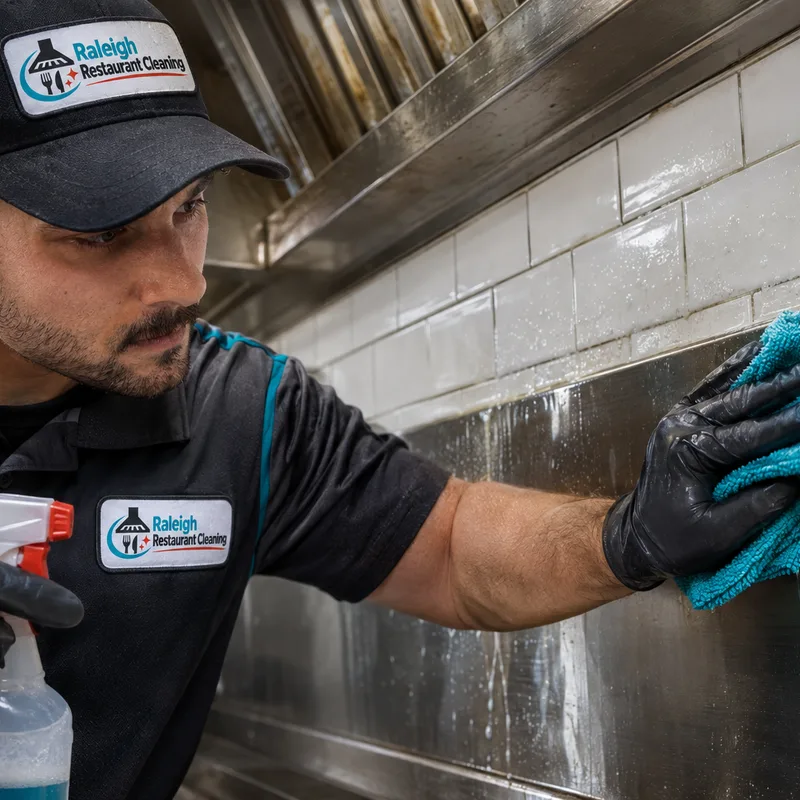
Degreasing targets accessible sides, fronts, legs, casters, control surrounds, and the floor edges where aerosolized oils collect. Equipment is handled according to the agreed access plan.
Washable surfaces around fryers, ranges, grills, and prep stations often hold a thin grease film that traps dust and becomes harder to remove over time.
Accessible shelving, table bases, undersides, and non-food-contact framework can be detailed after ingredients, utensils, and small equipment are cleared or protected.
Corners, floor-wall junctions, door thresholds, drains, and areas beneath safely movable equipment receive focused agitation because flat-pass mopping rarely reaches them well.
Handles, push plates, cooler exteriors, switches, and other frequently touched surfaces can be cleaned with chemistry appropriate for the material.
The completed work is checked against the written scope so missed edges, residue, standing water, or inaccessible areas can be documented before turnover.
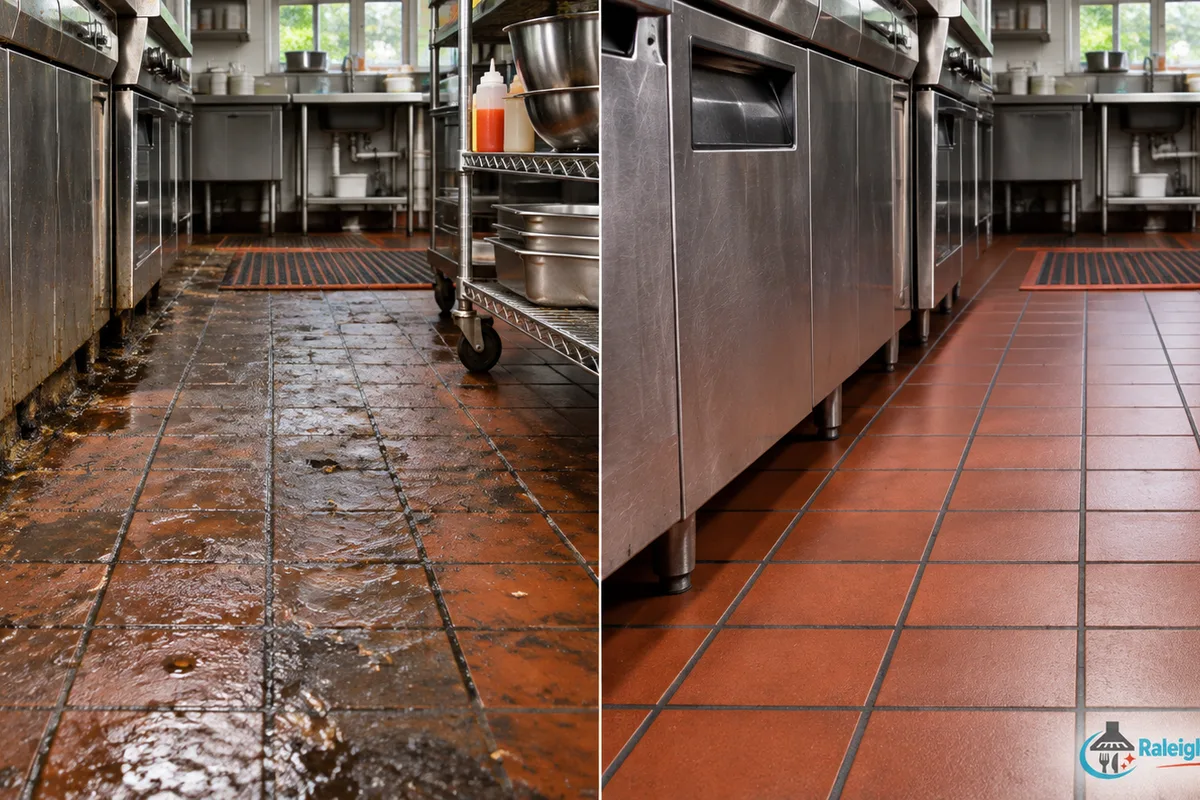
Restaurant Floor Cleaning Durham requires more than spreading detergent with a mop. Kitchen floors collect oil, protein soil, tracked debris, and residue in grout lines and textured surfaces. If dirty solution is moved across the room rather than recovered, the floor may dry with a greasy film.
The cleaning method starts with the floor type. Quarry tile and ceramic tile commonly tolerate mechanical agitation when the brush or pad is selected correctly. Grout lines may need focused scrubbing. Sheet vinyl and luxury vinyl require gentler chemistry and controlled moisture, while sealed concrete must be treated according to the coating condition. An automatic scrubber can dispense solution, agitate the floor, and recover wastewater in one pass, but compact machines or manual tools are often better around fixed equipment and narrow cook lines.
Floor drains are protected from loose debris, and wastewater is handled according to facility procedures. The floor should be left free of pooled solution and allowed to dry before normal traffic resumes. Cleaning can improve traction by removing oily soil, but no cleaning company should promise a specific slip-resistance result without testing the actual surface.
Step 1 of 5
We discuss the cooking equipment, floor type, known problem areas, operating schedule, loading access, and any building requirements. Photos or a walkthrough may be used to clarify the condition and access.
Step 2 of 5
The plan identifies included surfaces, exclusions, equipment movement, utility needs, preparation duties, and the expected service window. Specialized exhaust cleaning and other separately regulated work are clearly distinguished.
Step 3 of 5
Food, utensils, paper goods, and sensitive small equipment are removed or protected. The crew places signs or barriers, checks product labels, and confirms that surfaces are cool enough to clean safely.
Step 4 of 5
Chemistry is given suitable dwell time, deposits are agitated with surface-appropriate tools, and loosened soil is collected rather than pushed into corners. Floors are scrubbed after higher surfaces when the scope calls for both.
Step 5 of 5
The crew checks the agreed work, removes cleaning materials, and identifies any stains, damage, or inaccessible buildup that remains. The kitchen is returned according to the facility's reopening plan.
Deep cleaning is usually planned outside food preparation and service periods. The right window depends on the size of the kitchen, the amount of buildup, ventilation, drying time, equipment temperature, and whether several areas must remain available to staff. Overnight work may suit a downtown restaurant, while an operation with early breakfast preparation may prefer a closed day or a staged plan.
Durham's warm, humid periods can slow drying in kitchens with limited air movement. Ventilation and controlled water use matter, especially on textured floors and around equipment bases. A crew should also account for seasonal pollen and tracked soil at receiving doors rather than treating every dark floor mark as grease.
Before service, managers should identify alarm or access procedures, available hot water and power, approved chemical restrictions, waste and wastewater rules, and who may move gas-connected or hardwired equipment. Kitchen staff or qualified tradespeople should handle equipment that cannot be moved safely by cleaning personnel. Clear preparation reduces downtime and protects both the facility and the crew.
Restaurant kitchen deep cleaning in Durham typically ranges from $750 to $2,500 for a small to midsize kitchen, while large facilities or severe buildup may cost $2,500 to $6,000 or more. Floor-only cleaning may be quoted separately by area and condition.
Final price depends on kitchen size, grease level, floor material, equipment density, access, overnight scheduling, and whether equipment must be moved. Exhaust-system cleaning, pest remediation, and repairs are separate specialties. The exact cost is confirmed after a walkthrough, photos, or a detailed consultation establishes the scope.
A written scope gives your team a clear preparation list, identifies excluded work, and sets a realistic service window before cleaning begins.
Call for a Free QuoteA small kitchen may be completed in one service window, while a larger or heavily soiled facility can require a longer shift or staged visits. Equipment density, grease buildup, floor condition, access, and drying time determine the schedule. Downtown Durham loading constraints and building access rules should be addressed before the date is set.
Yes, floor cleaning can be scoped as a standalone service when the floor is the main concern. The crew still needs to identify the material, grease level, drain locations, equipment clearances, and suitable wastewater procedure. Quarry tile, vinyl, coated concrete, and grout do not all take the same brush, pad, or chemical.
The kitchen work area should be out of food production while deep cleaning is underway. Cleaning chemicals, wet floors, moved equipment, and active agitation do not belong beside open food preparation. Many Durham restaurants schedule the work after closing, on a closed day, or in isolated stages that preserve a safe separation from operations.
Staff should remove or protect food, utensils, disposable packaging, and portable equipment from the agreed work areas. Cooking equipment must be shut down and cool, and the manager should confirm utility access, alarms, entry procedures, chemical restrictions, and responsibility for moving connected equipment.
Hood, duct, filter, and rooftop-fan cleaning should be confirmed as a separate specialized scope rather than assumed. Exhaust systems involve grease-removal and fire-safety requirements beyond ordinary surface degreasing. Ask for clear documentation of what portions of the hood system are included before approving work.
The interval should be based on observed buildup, cooking volume, menu, equipment layout, floor texture, and the restaurant's own sanitation plan. Frying and charbroiling can create different grease loads than light assembly kitchens. Regular inspections of edges, equipment sides, grout, and wall film provide a better trigger than a generic calendar.
No, some discoloration remains after soil has been removed because grout, coatings, or flooring may be worn, etched, stained, or damaged. A test area can help separate removable residue from permanent change. Cleaning removes accessible soil; it does not repair failed grout, damaged sealers, or degraded floor coatings.
Tell Raleigh Restaurant Cleaning about the kitchen size, floor material, buildup, access, and preferred service window. We will use those details to outline the work and prepare a practical cleaning plan for your Durham restaurant.