Restaurant cleaning · Wake Forest, NC

Restaurant Cleaning Services in Wake Forest

Keep your kitchen, dining room, restrooms, and floors ready for the next shift with a cleaning plan built around your hours and operating needs.

✓Kitchen & dining areas ✓Floors & restrooms ✓Recurring & detail work
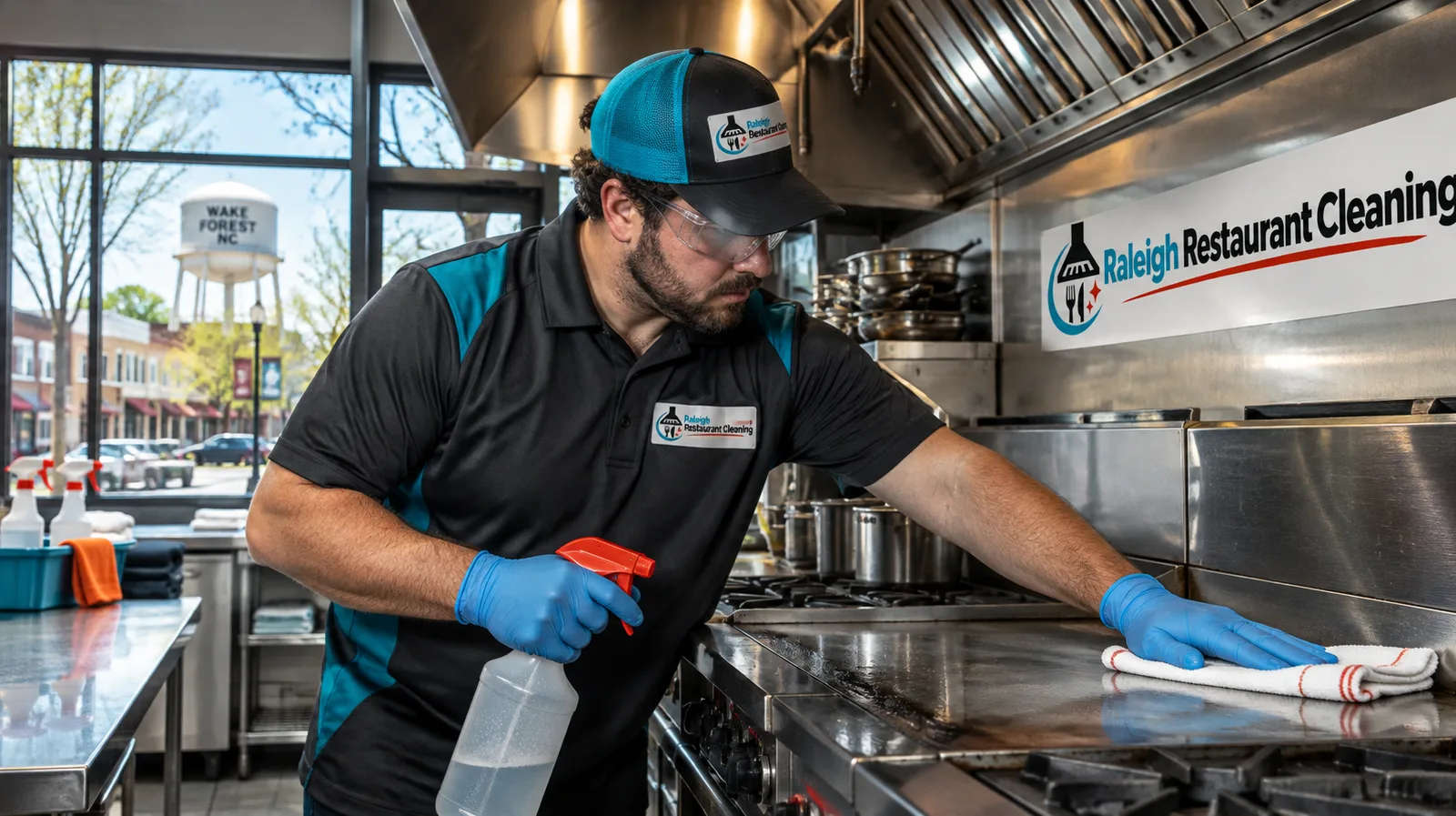
A professional cleaner detailing stainless steel cooking equipment in a well-maintained Wake Forest restaurant kitchen.
Local restaurant care

Dependable Cleaning for Wake Forest Restaurants

Restaurant Cleaning Services Wake Forest should support daily operations without getting in the way of prep, service, deliveries, or closing duties. Raleigh Restaurant Cleaning develops practical scopes for independent restaurants, cafés, bars, quick-service locations, and multi-unit operators. Work can be scheduled after closing, before opening, or during another agreed low-traffic period.

A good plan separates routine cleaning from periodic detail work. High-touch surfaces, dining floors, restrooms, and visible guest areas may need frequent attention. Grease-prone kitchen surfaces, floor edges, wall protection, and hard-to-reach buildup often need a planned rotation. Our crew documents the agreed tasks so managers know which areas are included and how often they are addressed.

Based at 418 W Peace St in Raleigh, Raleigh's trusted restaurant service team carries out restaurant cleaning with clear scopes, consistent routines, and respect for each location's access procedures. Wake Forest's humid summers can also increase tracked moisture and soil near entrances, while spring pollen quickly settles on glass and other visible surfaces. Cleaning frequency can be adjusted when weather or customer traffic creates extra work.

Request a Callback
Detailed scope

What Restaurant Cleaning Services Wake Forest Can Cover

Request a Callback
✓

Commercial Kitchen Cleaning

Degreasing for accessible equipment exteriors, backsplashes, prep surfaces, sinks, wall protection, shelving, floor edges, and other agreed areas. Food-contact surfaces are handled with products and procedures appropriate to the surface and task.

✓

Dining and Guest Areas

Cleaning can include tables, chair surfaces, booths, ledges, partitions, doors, interior glass, host areas, and other visible touchpoints. The scope is tailored to the room layout and the work already assigned to restaurant staff.

✓

Floor Care

Restaurant floors collect crumbs, grease film, beverage residue, and tracked soil. Service may include vacuuming, sweeping, wet mopping, machine scrubbing, and attention to edges or corners, depending on the flooring and its condition.

✓

Restroom Cleaning

Fixtures, counters, mirrors, partitions, touchpoints, floors, and waste receptacles can be included. Managers can also identify recurring concerns such as splash marks, odor sources, or heavy use during peak periods.

✓

Periodic Detail Work

Scheduled deep cleaning can target baseboards, floor edges, accessible equipment sides, vents, walls, doors, and buildup that routine closing work does not fully address.

✓

Waste and Service Areas

Trash removal, receptacle cleaning, and agreed interior service-area tasks can be added to the scope. Exterior grease containment, pest treatment, and hazardous waste require the appropriate specialist and separate arrangements.

Food-service methods

Kitchen Cleaning Built Around Food-Service Conditions

A restaurant kitchen is cleaned differently from an office or retail space. Grease can spread through foot traffic and airborne residue, while food debris collects beneath movable equipment, at floor-wall junctions, and around prep stations. Effective Restaurant Cleaning in Wake Forest starts with the correct chemistry, dwell time, agitation, and removal method for each soil and surface.

Degreasers must be compatible with stainless steel, tile, sealed flooring, and other finishes. Color-coded microfiber cloths and tools can help reduce cross-contact between kitchen, dining, and restroom areas. Where sanitizing is included, the surface must first be cleaned because soil can interfere with the sanitizer. The product label controls dilution, contact time, rinsing, and approved use.

Commercial hood interiors, ducts, and exhaust fans involve specialized fire-safety work and should not be confused with routine cleaning of accessible hood exteriors. During a walkthrough, the scope should state which surfaces are included, which require specialist service, and whether staff will move countertop items or small equipment before the crew arrives.

Request a Callback
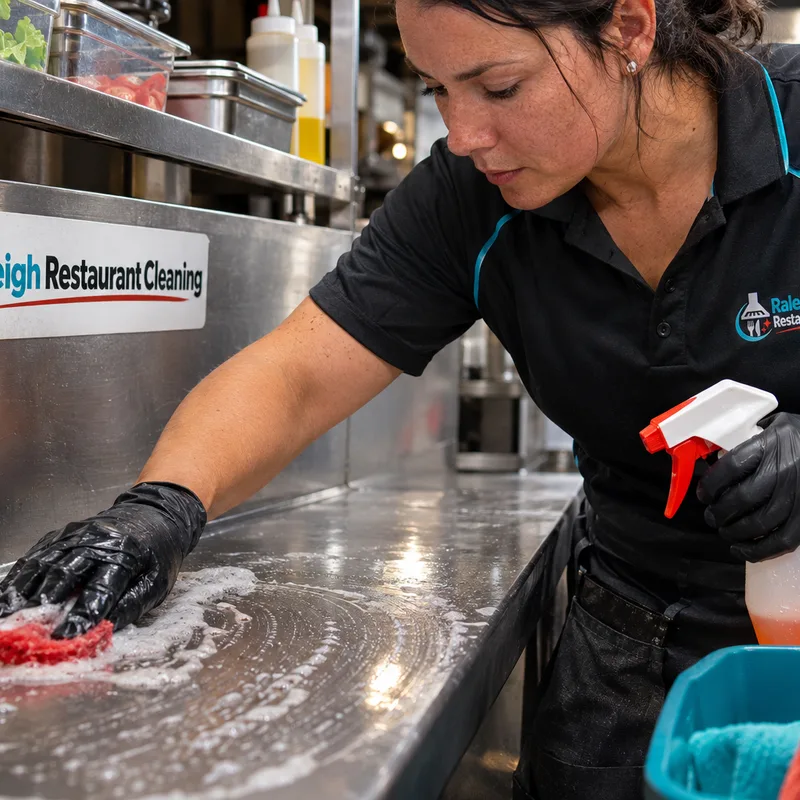
Close view of a cleaner using color-coded tools to degrease an accessible stainless steel prep area without disturbing food-service equipment.
Surface-specific products and separated tools help crews clean food-service spaces methodically.
Cleaning coordination

How a Restaurant Cleaning Plan Is Set Up

  1. Step 1 of 4

    Walk Through the Restaurant

    The walkthrough identifies the kitchen layout, dining capacity, flooring types, restrooms, storage limits, entry instructions, and areas that need special attention. Existing buildup and access around fixed equipment are noted before pricing.

  2. Step 2 of 4

    Define Tasks and Frequency

    The written scope separates recurring work from periodic deep cleaning. It should state the rooms, surfaces, exclusions, service frequency, and responsibilities that remain with restaurant employees.

  3. Step 3 of 4

    Set Access and Timing

    Managers confirm alarm procedures, keys or entry codes, locking instructions, and acceptable service windows. Scheduling should leave enough time for cleaned floors and other surfaces to be ready before employees return.

  4. Step 4 of 4

    Complete and Review the Work

    The crew follows the agreed checklist and reports access problems, damage noticed during service, or tasks that could not be completed. Management feedback is used to correct priorities and refine future visits.

A restaurant cleaning crew unloading organized, color-coded supplies outside a Wake Forest commercial restaurant after closing.
Local operating context

Cleaning That Fits Wake Forest Service Patterns

Wake Forest restaurants operate in several types of commercial settings, and each creates different cleaning demands. Downtown Wake Forest includes street-facing businesses where entry glass and tracked soil can affect the first impression. Restaurants around The Factory may manage activity tied to events and shared destination traffic. Retail centers along Capital Boulevard often have extended service periods, frequent takeout movement, and busy entrances. Heritage-area properties may also have tighter layouts or finishes that need gentler cleaning methods.

These differences affect labor and timing. A compact dining room with movable furniture may be straightforward to reset, while fixed booths, textured floors, multiple restrooms, and tightly spaced kitchen equipment add detail work. Late closing times can narrow the available service window. The plan should account for those conditions instead of relying on a generic checklist.

Wake County restaurant operators remain responsible for meeting applicable food-safety requirements. Professional cleaning can support a sanitary facility, but it does not replace employee food-handling duties, required temperature controls, pest management, or regulatory inspections.

Request a Callback
Compare the scope

What to Look for in a Restaurant Cleaning Scope

A useful proposal is specific enough to compare. It should identify service areas, frequency, approximate service windows, floor methods, periodic tasks, and exclusions. Ask who supplies consumables, whether moving equipment is included, how keys or alarm codes are controlled, and how missed or unsatisfactory work is reported.

The condition of the restaurant at startup matters. A location with heavy grease film or neglected floor edges may need an initial deep cleaning before recurring service can maintain it. Remodel dust, post-construction residue, pest contamination, mold, bodily fluids, and chemical spills can require a separate assessment or a specialist. These conditions should be disclosed before work is scheduled.

Managers should also confirm product restrictions. Natural stone, unsealed grout, luxury vinyl, wood, painted walls, and specialty metals do not all tolerate the same chemistry or agitation. Manufacturer care instructions take priority when available. A professional scope matches the method to the material rather than applying one degreaser throughout the building.

Request a Callback

Bring the restaurant's floor plan, operating hours, problem areas, and preferred service frequency to the walkthrough so the written scope reflects the work your location actually needs.

Call for a Free Quote
Common questions

Restaurant Cleaning Wake Forest FAQs

How much do restaurant cleaning services cost in Wake Forest?

Restaurant cleaning is usually priced after a walkthrough because square footage alone does not show the amount of labor required. Cost drivers include kitchen grease levels, flooring, restroom count, dining-room layout, service frequency, closing time, access around equipment, and whether an initial deep clean is needed. A written proposal should separate recurring service from periodic detail work and confirm the exact price after the restaurant has been assessed.

Can cleaning be scheduled after our Wake Forest restaurant closes?

Yes, after-hours cleaning can be arranged when the available service window is long enough for the agreed work. The manager and cleaning team should document entry, alarm, locking, lighting, and employee departure procedures. If a location near downtown Wake Forest has a late closing time or early prep shift, the scope may need rotating tasks or service on selected nights.

How often should a restaurant schedule professional cleaning?

Frequency depends on traffic, menu, cooking volume, flooring, and what employees clean during each shift. Guest-facing floors and restrooms may require frequent service, while floor edges, walls, accessible equipment sides, and other detail areas can follow a rotating schedule. The initial walkthrough should produce a frequency plan based on actual soil levels rather than a fixed package.

Do you clean commercial kitchen hoods and exhaust ducts?

Routine kitchen cleaning may include accessible hood exteriors when they are listed in the scope, but internal hood, duct, and exhaust-fan cleaning is specialized work. Those grease-removal systems are tied to fire-safety requirements and should be serviced by a qualified provider. The proposal should clearly distinguish exterior surface cleaning from exhaust-system cleaning.

Can a cleaning company sanitize food-contact surfaces?

Food-contact surfaces can be sanitized only with an appropriate labeled product and the required procedure. The surface must be cleaned first, and the product label determines dilution, contact time, rinsing, and approved surfaces. Restaurant management should confirm how this task fits its food-safety plan and which duties remain with trained kitchen employees.

Do we need a deep cleaning before recurring service begins?

An initial deep cleaning is recommended when existing buildup cannot be addressed within a normal maintenance visit. Heavy grease film, darkened grout lines, neglected floor edges, and residue behind movable items can add substantial startup labor. After that reset, recurring Restaurant Cleaning Wake Forest can focus on keeping the agreed areas at a more consistent baseline.

Will the crew move kitchen equipment and dining furniture?

Movable items should be identified during the walkthrough, and the written scope should state who moves them. Chairs and light tables may be manageable, while connected, heavy, hot, or unstable kitchen equipment should remain in place unless safe movement has been specifically arranged. Clear responsibility protects employees, cleaners, equipment, and utility connections.

Can the cleaning plan change during pollen season or busy periods?

Yes, service frequency and task rotation can be adjusted when Wake Forest conditions increase soil or customer traffic. Spring pollen can increase residue on entrance glass and nearby surfaces, while humid or rainy weather can add moisture and tracked dirt at doors. Temporary changes should be documented so managers know the added tasks, dates, and price.

Set Up a Cleaner, More Consistent Restaurant

Tell Raleigh Restaurant Cleaning about your operating hours, current trouble spots, flooring, kitchen conditions, and preferred schedule. A walkthrough can turn those details into a practical written scope for your Wake Forest location.