
Fixtures and Partitions
Toilets, urinals, seats, flush controls, partition doors, and latches are cleaned with attention to splash zones, edges, and bases.
Serving Raleigh, North Carolina & surrounding areas
Open 24/7
Keep guest restrooms fresh, stocked, and ready for service with a cleaning schedule built around your operating hours.
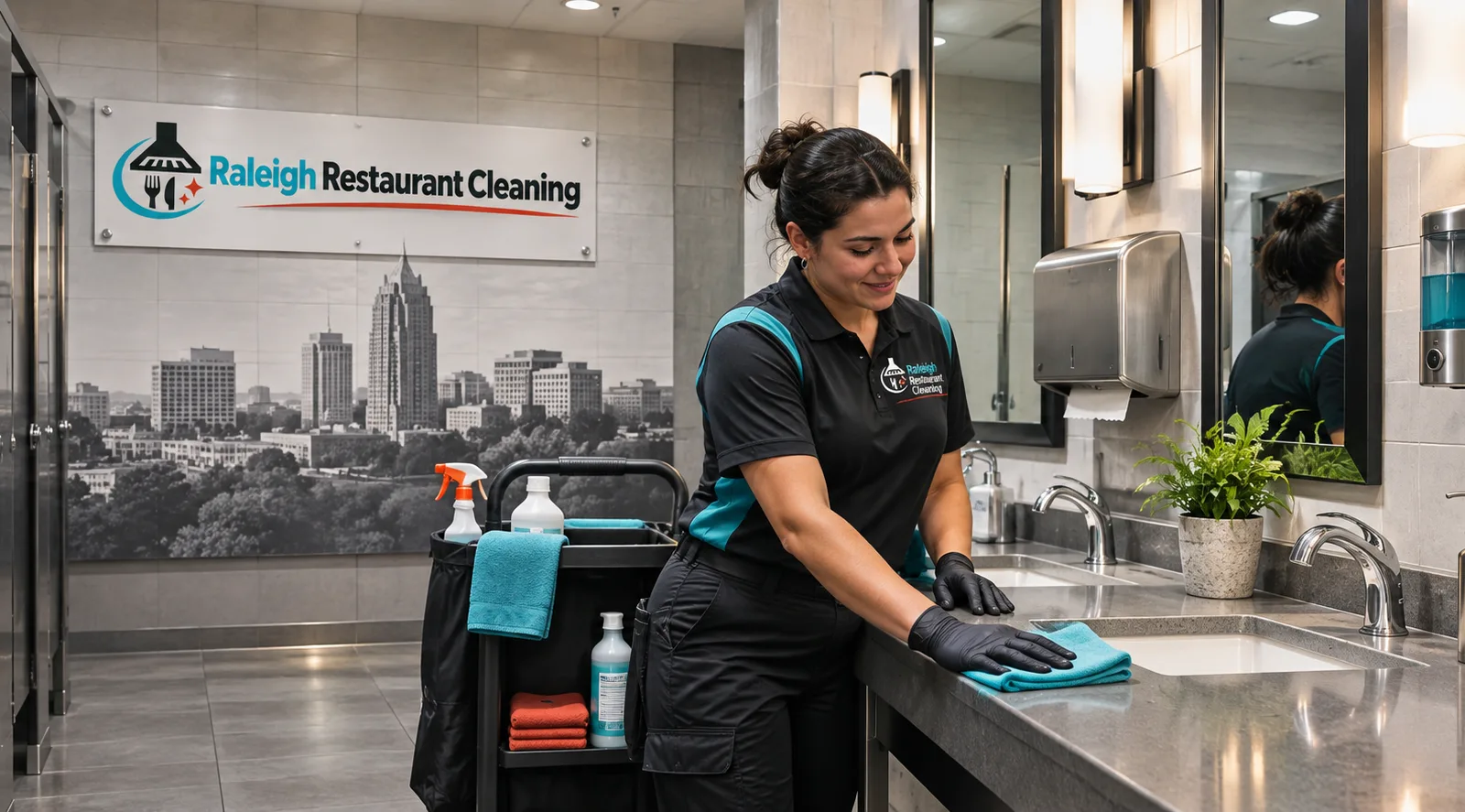
Restaurant Restroom Cleaning addresses the surfaces, fixtures, odors, and high-touch points that shape a guest's impression of your operation. Raleigh Restaurant Cleaning can schedule the work daily, nightly, or overnight so cleaners are not competing with diners or staff for access.
Our team works as a restaurant service company Raleigh homeowners rely on while adapting each restroom scope to commercial traffic, operating hours, fixture count, and stocking needs. That means the plan is based on the actual room rather than a generic checklist. We document expected tasks, access instructions, approved products, and service frequency before recurring work begins.
Restaurants near downtown event venues may experience sharp traffic increases before and after concerts or games. Glenwood South dining and nightlife businesses often need late access after closing, while North Hills restaurants may require a precise handoff between evening staff and cleaners. In each setting, the goal is the same: complete the work at a practical time and leave the restroom ready for the next service period.
A complete restroom visit starts with soil removal, not fragrance. Cleaners remove loose debris, empty waste receptacles, clean dispensers, and address visible splashes before disinfecting appropriate hard, nonporous surfaces. Floors are cleaned last so the room can be left orderly and allowed to dry.
Typical work includes toilets, urinals, partitions, flush handles, faucets, sinks, counters, mirrors, door handles, push plates, dispensers, waste containers, baseboards, and floors. High-touch points receive particular attention. Product labels determine required dilution, surface compatibility, and disinfectant contact time. Applying a disinfectant and immediately wiping it away may not satisfy the label's dwell time.
The scope can also include restocking customer-supplied soap, toilet tissue, paper towels, and liners. Persistent odor is treated as a cleaning or maintenance signal, not something to cover with heavy fragrance. Soil around toilet bases, buildup in floor edges, dirty waste containers, and dry floor drains can all contribute to an unpleasant room. Plumbing defects, leaks, damaged dispensers, and failed exhaust systems should be reported for repair rather than treated as cleaning problems.
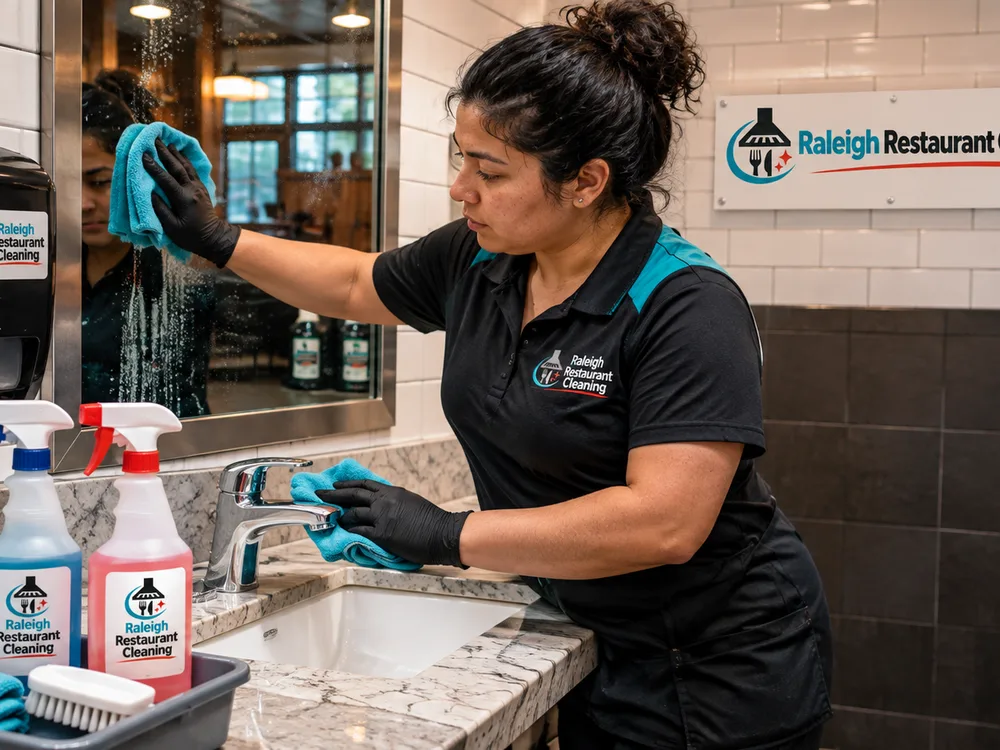
Toilets, urinals, seats, flush controls, partition doors, and latches are cleaned with attention to splash zones, edges, and bases.
Faucets, basins, counters, door hardware, dispensers, and other frequently touched surfaces are cleaned and disinfected as appropriate.
Debris is removed before damp cleaning. Corners, baseboards, grout lines, and the areas around fixtures are included according to the agreed scope.
Waste is removed, liners are replaced, and designated dispensers are refilled with customer-supplied consumables.
Cleaners can note leaks, loose hardware, blocked dispensers, recurring odor, or damage so restaurant management can arrange the right repair.
Access, alarms, keys, wet-floor controls, and completion procedures are set before the first scheduled visit.
Step 1 of 5
We review fixture count, floor material, partitions, dispensers, waste volume, existing buildup, storage, and any areas that require special handling.
Step 2 of 5
The scope separates every-visit tasks from periodic detail work. It can also identify who supplies consumables and which conditions staff should report.
Step 3 of 5
Daily restaurant cleaning may occur after lunch, after closing, or before opening. Overnight restaurant cleaning is often the better fit when dining rooms remain active late.
Step 4 of 5
Management provides approved entry instructions, alarm procedures, chemical storage rules, and a contact process for urgent building issues.
Step 5 of 5
The schedule can be revised when guest traffic, business hours, events, or seasonal demand changes. A restroom that stays clean during a quiet week may need more attention during a busy period.
The right frequency depends on traffic, restroom size, closing time, and the amount of attention employees provide during service. Daily restaurant cleaning creates a dependable reset between operating days. A restaurant night cleaning schedule may begin shortly after the last guests leave. Overnight restaurant cleaning allows a wider access window for detail work and floor drying when the building is otherwise quiet.
Nightly restaurant cleaning in Raleigh can be especially useful for Glenwood South businesses that close late and downtown restaurants affected by event traffic. Restaurants in mixed-use areas such as North Hills may have building access, parking, or alarm procedures that cleaners must follow precisely. Cameron Village, also known as the Village District, has restaurants near retail and pedestrian activity, so service timing should account for both operating hours and property access.
Recurring restaurant cleaning should also distinguish between routine and periodic tasks. Routine visits handle fixtures, touchpoints, waste, supplies, and floors. Periodic work may address partition edges, grout buildup, vents, walls, or other detailed areas that do not require the same frequency. This division keeps the nightly checklist realistic while preventing gradual decline.
A restaurant janitorial company should be able to explain exactly what happens during each visit. Ask for a written scope that identifies fixtures, floors, touchpoints, consumables, waste handling, periodic tasks, and exclusions. Confirm whether the company provides cleaning chemicals and equipment, and whether the restaurant supplies paper products, soap, and liners.
Product use matters. Cleaners should follow manufacturer labels for dilution, application, dwell time, ventilation, and surface compatibility. Acidic bowl products, disinfectants, glass cleaners, and floor chemicals should not be mixed or transferred into unmarked containers. Color-coded cloths or other separation methods can help reduce cross-use between toilet areas and sink or counter surfaces.
Reliable Restaurant Janitorial Services Raleigh operators also need a clear method for access and communication. Written key or alarm procedures reduce closing-shift confusion. Completion records can confirm the service occurred, while condition notes help management respond to a leak, broken latch, empty dispenser, or recurring drainage issue. Raleigh Restaurant Cleaning builds these details into the plan rather than leaving them to informal instructions.
Set a restroom cleaning schedule that matches your closing time, guest traffic, fixture count, and stocking responsibilities.
Call for a Free QuoteRestaurant restroom cleaning is usually priced after reviewing fixture count, service frequency, room condition, access, and supply responsibilities. A small single-restroom operation has a different workload than a late-night venue with multiple toilets, urinals, partitions, and frequent waste removal. Periodic detail work, initial buildup removal, and restricted access can also affect the quote. Raleigh Restaurant Cleaning confirms the exact price after discussing the scope and, when needed, completing a walkthrough.
Yes, restaurant night cleaning can be scheduled after closing when access and alarm procedures are arranged in advance. Late-closing businesses in Glenwood South may need a later arrival window, while downtown operations may need schedules adjusted around events. The plan should state who provides access, where supplies are stored, and how the building is secured after work.
The appropriate frequency depends on guest traffic, operating hours, restroom size, and what employees handle during service. Daily restaurant cleaning is often used to provide a consistent reset, but busy facilities may still need employee checks and spot attention while open. A walkthrough helps separate the professional cleaning schedule from the restaurant's in-shift monitoring duties.
Restocking can be included when the restaurant supplies the approved consumables and identifies where they are stored. The written scope should list each dispenser and state whether the cleaner reports low inventory. This avoids uncertainty when proprietary dispensers require a particular refill size or product.
Cleaning can address odors caused by waste, surface soil, buildup around fixtures, or neglected edges, but mechanical and plumbing causes require repair. Dry floor drains, leaks, damaged seals, or poor exhaust performance should be investigated rather than masked with fragrance. Cleaners can document where an odor returns so management has useful information for maintenance.
Recurring restaurant cleaning follows a defined checklist for fixtures, partitions, touchpoints, sinks, mirrors, waste, supplies, and floors. The agreement should also identify periodic detail tasks, service days, access times, consumable responsibilities, and exclusions. A clear scope makes it easier to inspect the work and adjust frequency when Raleigh event traffic or operating hours change.
The start date depends on the walkthrough, agreed scope, scheduling availability, and completion of access instructions. Before the first visit, management should confirm keys or entry procedures, alarm steps, chemical storage, restroom availability, and who receives condition reports. Establishing those details first reduces interruptions after the nightly schedule begins.
Tell Raleigh Restaurant Cleaning about your restrooms, operating hours, current cleaning routine, and preferred service window. We will help define a practical recurring scope for daily, nightly, or overnight work.