Restaurant cleaning · Garner, NC

Restaurant Cleaning in Garner

Detailed kitchen, dining room, and restroom cleaning planned around your operating hours, food-safety routines, and daily workload.

✓Kitchens & cook lines ✓Dining rooms & restrooms ✓Recurring & deep cleaning
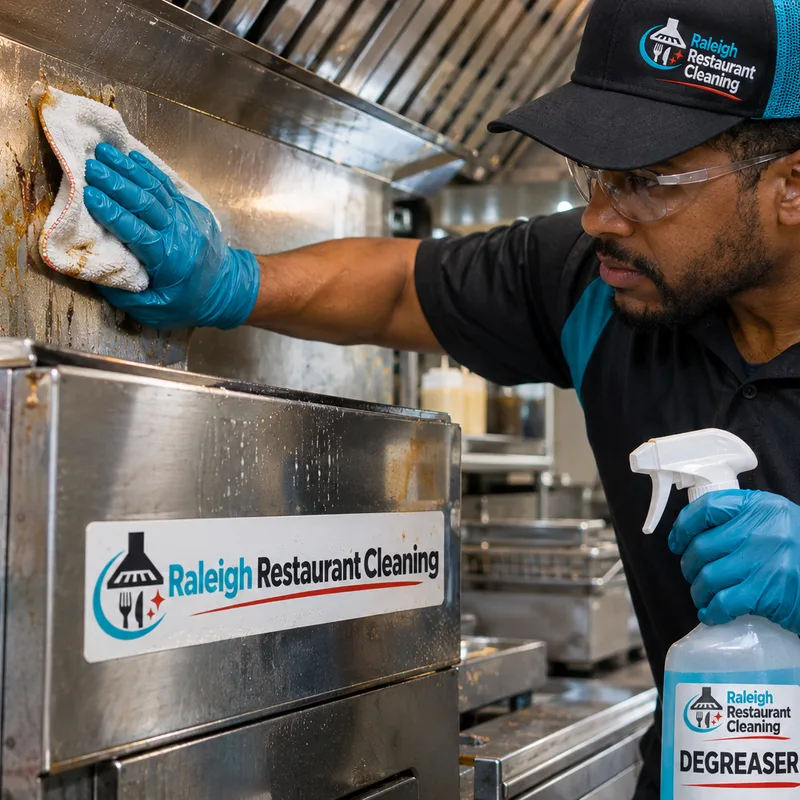
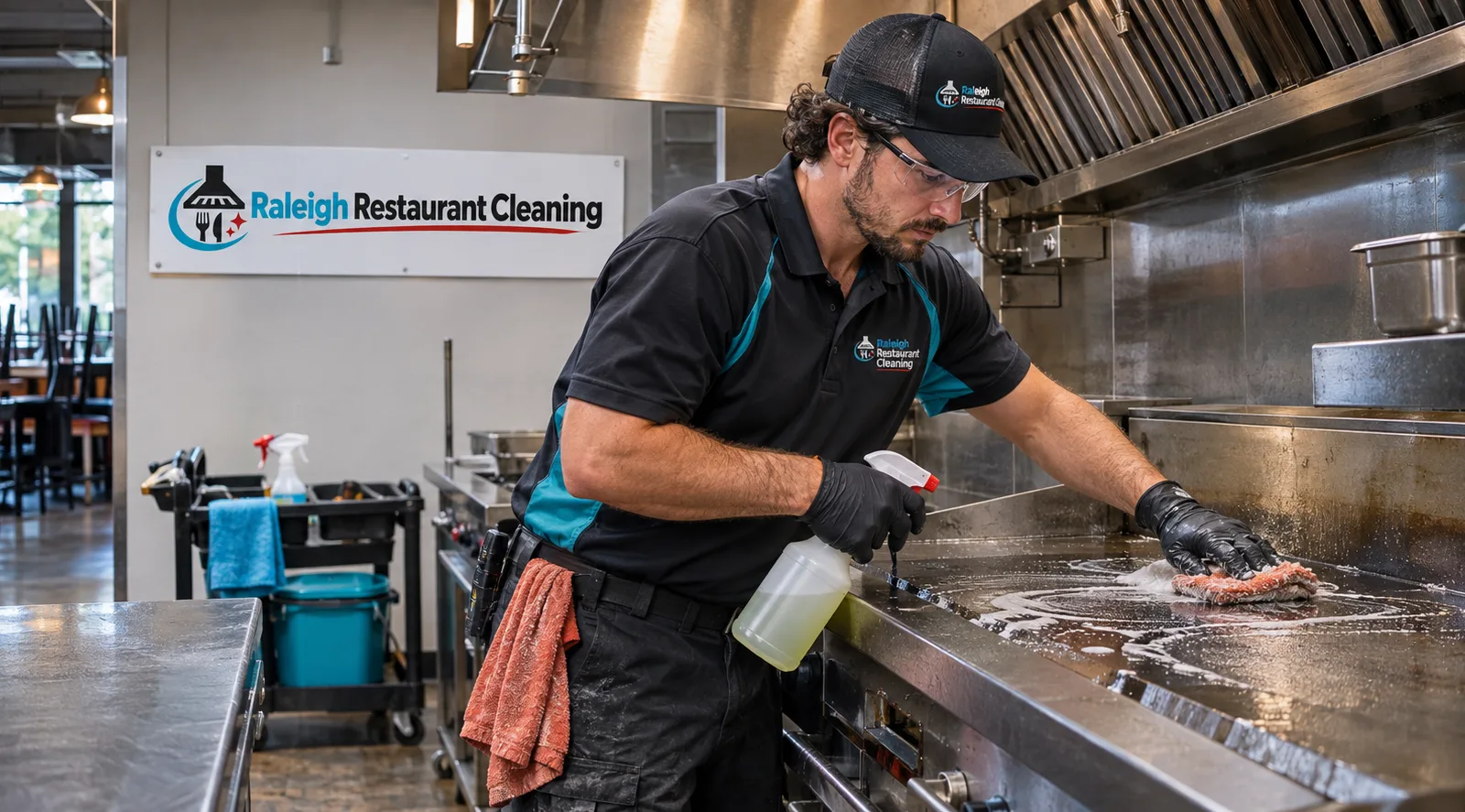
A professional cleaner degreasing stainless steel cooking equipment in a well-maintained Garner restaurant kitchen after service.
Facility-specific service

Reliable Restaurant Cleaning Garner Operators Can Schedule Around Service

Restaurant Cleaning Garner businesses can rely on starts with a written scope built around the actual facility. Raleigh Restaurant Cleaning handles recurring and deep cleaning for independent restaurants, quick-service locations, cafés, bars, and other food-service operations. The work can cover customer-facing areas, back-of-house surfaces, restrooms, employee areas, and high-touch points without losing sight of the details that affect daily operations.

We are Raleigh's restaurant service specialists who plan the work around opening hours, closing routines, delivery windows, and the areas your staff already cleans during a shift. That division of responsibility matters. It prevents duplicated work and identifies periodic jobs that busy crews may not have time to complete, such as detailed floor-edge cleaning, buildup removal around equipment, and washing partitions or wall surfaces.

Garner restaurants operate within Wake County and near major commercial corridors such as US 70 and US 401, where quick table turns and steady customer traffic can put extra pressure on entrances, dining floors, and restrooms. Humid North Carolina summers also bring tracked moisture and soil through entryways. A practical cleaning plan accounts for those conditions instead of applying the same checklist to every property.

Request a Callback
Room-by-room scope

A Complete Scope for Front and Back of House

Request a Callback
✓

Kitchen Detail Cleaning

Degreasing targets accessible cooking-line surfaces, equipment exteriors, backsplashes, prep tables, shelving, sinks, and washable walls. Cleaning methods and products are matched to stainless steel, tile, sealed flooring, and other surface materials.

✓

Dining and Guest Areas

Service may include vacuuming or damp mopping floors, wiping tables and chairs, cleaning ledges, removing fingerprints from glass, dusting fixtures, and addressing spills or soil around booths and floor edges.

✓

Entryways and High-Touch Points

Door glass, handles, host stands, railings, payment-area touchpoints, and other frequently handled surfaces receive consistent attention. Entry mat areas can be detailed to control tracked dirt.

✓

Restaurant Bathroom Cleaning

Toilets, urinals, sinks, mirrors, dispensers, partitions, floors, and touchpoints are cleaned and disinfected. The scope can also include odor-source checks and supply restocking when products are provided.

✓

Employee and Utility Areas

Break areas, offices, corridors, and accessible utility spaces can be added to the schedule. These areas are documented separately so the crew knows which surfaces and rooms are included.

✓

Periodic Deep Cleaning

Scheduled detail work addresses buildup that routine service may not remove. Examples include baseboards, floor edges, washable wall areas, grout lines, chair legs, and accessible surfaces behind movable items.

Food-service standards

Kitchen Cleaning Built Around Food-Service Conditions

Restaurant kitchens need more than a general janitorial pass. Aerosolized grease settles on equipment exteriors, walls, shelving, and nearby floors. Food debris collects beneath movable items and along edges. If either remains in place, the next shift starts with avoidable soil and slippery surfaces.

A professional routine separates cleaning from sanitizing. Cleaning removes grease, food residue, and other soil. Sanitizing or disinfecting follows on suitable, precleaned surfaces with the product used according to its label, including the required contact time. Food-contact surfaces require products and procedures appropriate for those surfaces, followed by any rinse required by the label. Safety Data Sheets should remain available for workplace chemicals, and products must never be mixed unless the manufacturer expressly permits it.

The scope should identify equipment that may be moved, equipment that remains in place, and any surfaces the cleaning crew must not open or disassemble. Hood ducts, fire-suppression components, internal equipment parts, and pest treatment require properly qualified specialty providers. Clear boundaries protect the restaurant and keep routine cleaning focused.

Request a Callback
Close view of a restaurant cleaning professional removing grease from a stainless steel backsplash and equipment exterior with labeled commercial cleaning supplies.
Soil is removed before an appropriate sanitizer or disinfectant is applied.
Cleaning coordination

How Our Restaurant Cleaning Process Works

  1. Step 1 of 5

    Walk Through the Facility

    We review the kitchen, dining room, restrooms, entrances, employee spaces, flooring, access points, and operating schedule. The walkthrough also identifies delicate surfaces and restricted equipment.

  2. Step 2 of 5

    Build a Written Scope

    Each room is assigned tasks and a service frequency. The plan states what is included, what restaurant staff will handle, which supplies are provided, and which specialty jobs fall outside routine service.

  3. Step 3 of 5

    Set Access and Safety Procedures

    We confirm entry arrangements, alarm instructions, wet-floor controls, chemical storage expectations, and the preferred order of work. Cleaning after closing may reduce conflicts with guests and food preparation.

  4. Step 4 of 5

    Complete and Document Service

    The crew follows the agreed checklist and reports access problems, unusual buildup, damage, leaks, or empty dispensers that may need management attention.

  5. Step 5 of 5

    Review and Adjust

    Traffic, menus, seasons, and operating hours change. The scope can be revised when a dining area is expanded, a restroom needs more frequent attention, or a recurring trouble spot becomes apparent.

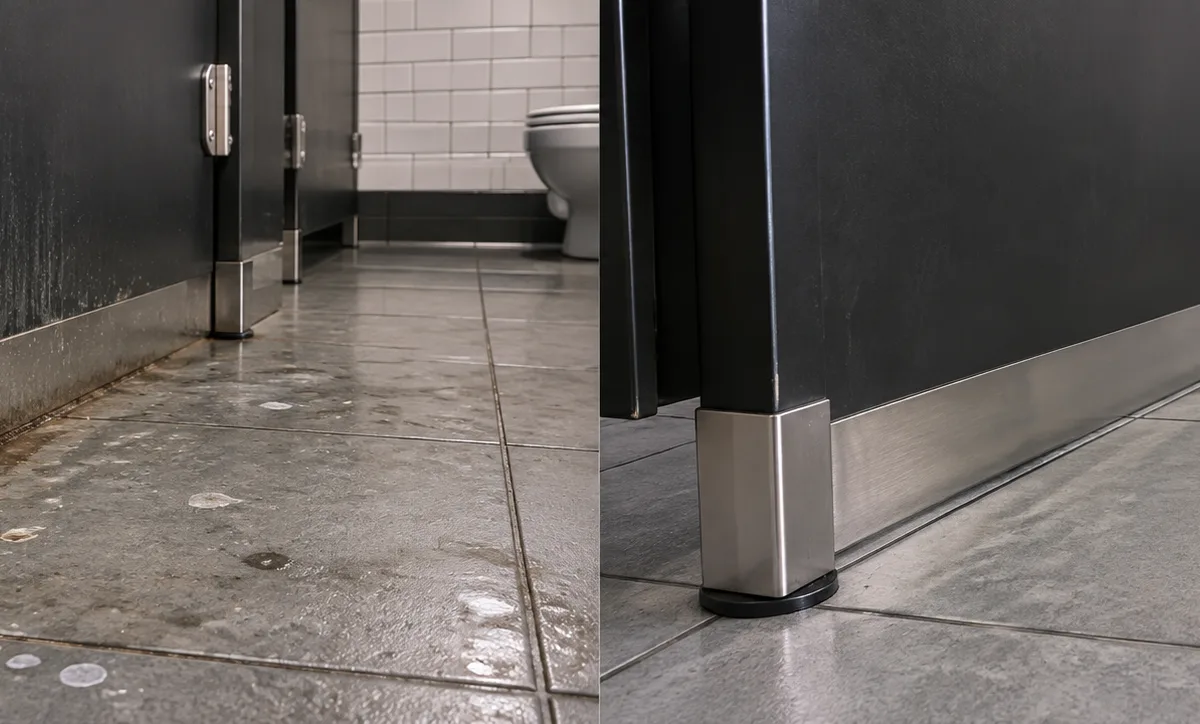
Side-by-side view of a restaurant restroom floor and partition area before detail cleaning and after residue, spots, and floor-edge soil have been removed.
Detail work focuses on fixtures, partitions, floor edges, and odor sources.
Guest-facing cleanliness

Restaurant Bathroom Cleaning Garner Guests Notice

Restaurant Bathroom Cleaning Garner operators schedule should reflect customer volume and restroom design. A dependable visit covers fixtures, sinks, mirrors, partitions, dispensers, floors, door handles, and other high-touch surfaces. Soil must be removed before disinfectant is applied, and the surface must remain visibly wet for the product's labeled contact time.

Odor control starts with finding and removing the source. Common trouble areas include the floor around fixtures, the underside of toilet rims, partition edges, grout, drains, waste containers, and the gap where fixtures meet the floor. Fragrance alone does not correct residue or drainage concerns. A cleaner should report a persistent drain odor, leaking fixture, failed dispenser, or damaged caulk so management can arrange the proper repair.

Service frequency depends on customer traffic, hours, restroom capacity, and how often employees inspect the room during operation. A closing clean can reset the restroom, while staff checks during open hours handle spills, paper supplies, and immediate concerns.

Request a Callback
Compare the scope

What to Look for in a Restaurant Cleaning Proposal

A useful proposal names the rooms, tasks, and frequencies instead of promising a generally clean restaurant. Look for separate descriptions of nightly or recurring duties and periodic deep-cleaning work. The document should also state whether consumable supplies, liners, paper goods, and hand soap are included or supplied by the restaurant.

Ask how the crew handles food-contact surfaces, chemical labels, contact times, cross-contamination controls, and wet-floor hazards. Color-coded cloths and tools can help keep restroom equipment separate from dining and kitchen areas. Mop water and cleaning tools should be changed or cleaned as conditions require, rather than carried through the entire facility.

Access is another cost and reliability factor. A crew that must wait for a manager, work around a late kitchen close, or repeatedly move heavy equipment may need more labor time. Agreeing on a realistic start window and leaving the scheduled areas ready for service makes the routine easier to maintain.

Raleigh Restaurant Cleaning is based on West Peace Street in Raleigh and serves nearby Garner businesses with scopes shaped around each operation. Before work begins, management should know who handles access, where chemicals may be stored, how concerns are reported, and when completed work will be reviewed.

Request a Callback
Garner pricing context

How Much Does Restaurant Cleaning Cost in Garner?

Recurring restaurant cleaning in Garner typically costs about $0.12 to $0.30 per square foot per visit, while a detailed one-time deep clean may range from roughly $0.30 to $0.70 per square foot. Small facilities may instead be priced with a minimum visit charge.

Final pricing depends on kitchen grease, floor type, restroom count, equipment access, cleaning frequency, operating hours, and whether supplies or periodic detail tasks are included. These are general, non-binding ranges; the exact cost is confirmed after a facility walkthrough and scope review.

Request a Callback

A walkthrough turns general expectations into a room-by-room cleaning plan with clear frequencies, responsibilities, and scheduling.

Call for a Free Quote
Common questions

Questions Garner Restaurant Managers Ask

Can restaurant cleaning be scheduled after closing?

Yes, service can often be planned after closing or during another low-activity window, subject to crew availability and building access. Garner operators should allow enough time for kitchen shutdown, staff departure, floor drying, and alarm procedures before the next opening.

How often should a Garner restaurant be professionally cleaned?

The right frequency depends on operating hours, customer traffic, menu, floor materials, and the amount of cleaning employees complete during shifts. Busy dining rooms and restrooms may need frequent recurring service, while detailed wall, baseboard, grout, and equipment-exterior work can be placed on a rotating schedule.

Do you clean behind restaurant equipment?

Accessible areas behind equipment can be cleaned when the scope permits the item to be moved safely. Gas-connected, hard-wired, plumbed, fixed, or very heavy equipment should be moved only by authorized people, so those restrictions are identified during the Garner facility walkthrough.

Are food-contact surfaces included?

Food-contact surfaces can be included when the required products, procedures, and responsibilities are agreed in advance. Cleaning removes soil first; an appropriate sanitizer is then used according to its label, including concentration, contact time, and any required rinse.

Can you clean restaurant bathrooms without interrupting customers?

Yes, the main restroom clean can be scheduled outside guest hours, while restaurant employees handle inspections and urgent issues during service. The plan should account for the number of fixtures, customer volume, drying time, supply checks, and safe temporary closure of the room.

Do you clean exhaust hoods and grease ducts?

Routine cleaning can cover agreed, accessible hood exteriors, but internal exhaust ducts and fan systems require qualified commercial kitchen exhaust cleaners. The proposal should distinguish surface cleaning from code-related hood and duct service so the restaurant knows which provider handles each task.

What should be ready before the cleaning crew arrives?

The scheduled areas should be accessible, with food secured, dishes removed from cleaning zones, and restricted equipment identified. Garner managers should also provide current access instructions, alarm procedures, approved chemical-storage locations, and a contact for reporting leaks, damage, or supply shortages.

Set Up a Clear Cleaning Plan for Your Garner Restaurant

Tell Raleigh Restaurant Cleaning about your facility, operating hours, and problem areas. We will discuss the scope, service frequency, access needs, and a practical plan for keeping guest and work areas ready.